
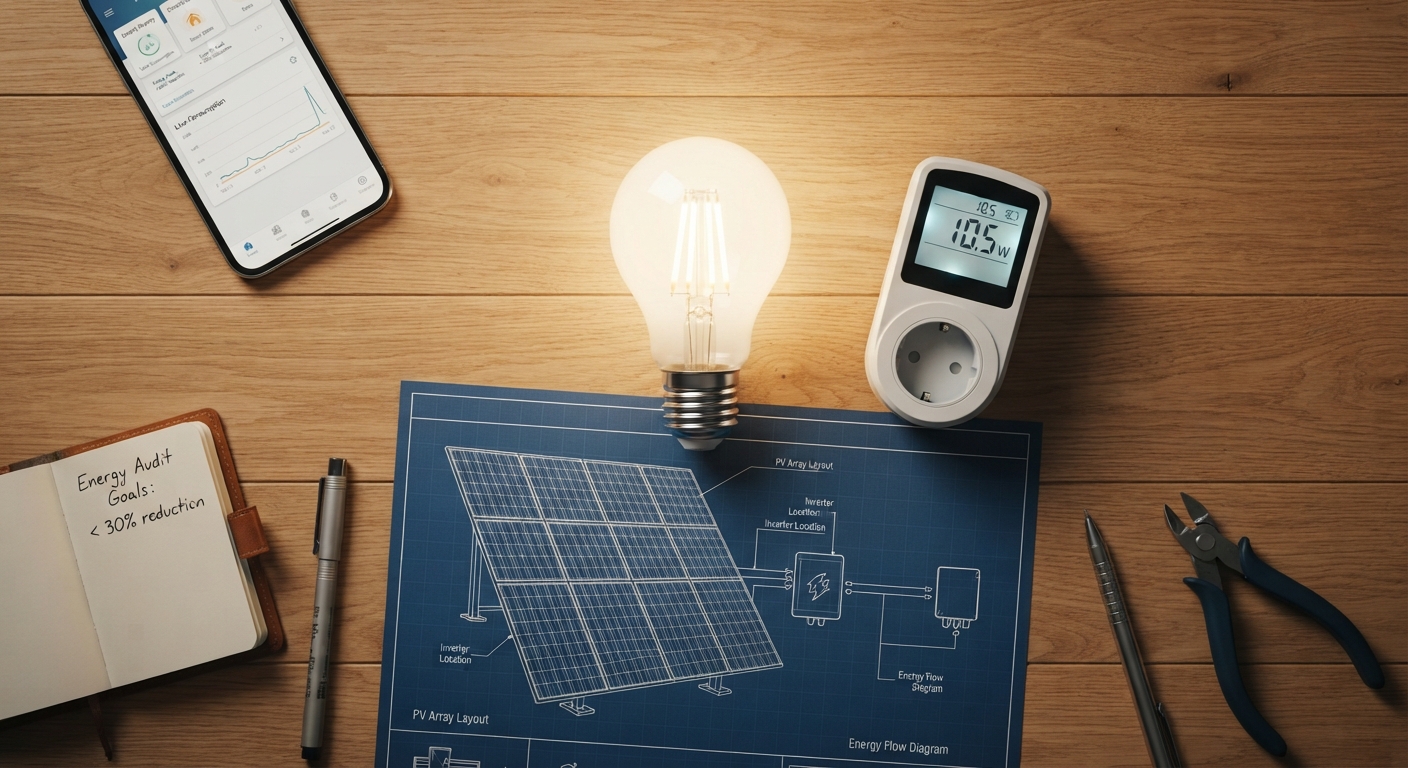
If you have searched for Wattios, you may be wondering whether it is a new electrical unit, an energy technology, or the name of a company. In most electricity-related contexts, Wattios is connected with watts, the standard unit used to measure power. Historical Spanish terminology also contains forms such as wattio and wattios. At the same time, Wattios is used commercially by an energy company in Florida. Understanding the context is therefore essential before deciding what the word means.
Quick Answer: Wattios is not a separate modern SI unit of power. The official SI unit is the watt (W), equal to one joule per second. “Wattios” can refer to historical Spanish terminology related to the watt, while Wattios Energy refers to a Florida-based energy business.
What Does Wattios Mean?
The meaning of Wattios depends largely on where you encountered the term.
In an electrical or scientific context, it is associated with the watt, the unit used to express power. The Spanish historical dictionary records vatio, watio, wattio, and historical examples of wattios. The modern SI system, however, uses watt, with the symbol W.
A watt measures the rate at which energy is transferred or used. NIST defines one watt as one joule per second.
For example:
- A 10 W LED bulb has a power rating of 10 watts.
- A 100 W device uses energy at a rate of 100 joules per second while operating at that rating.
- A 1,000 W appliance is equivalent to 1 kilowatt.
This distinction is important because power and energy are not the same thing.
Is Wattios an Official SI Unit?
No. Wattios is not the modern official SI unit name.
The International System of Units recognizes the watt (W) as the derived unit of power. BIPM describes the watt as equivalent to joule per second, or J/s.
The historical Spanish terminology is nevertheless genuine. The Real Academia Española’s historical dictionary traces vatio and related forms including watio and wattio to the English word watt, which comes from the surname of Scottish engineer James Watt. It also documents historical uses of wattios.
So, it is more accurate to think of Wattios as a historical or language-related form associated with watts, rather than as a separate scientific unit.
Wattios vs. Watt at a glance
| Term | Meaning | Modern SI status |
|---|---|---|
| Watt | Unit of power | Official SI derived unit |
| W | Symbol for watt | Official symbol |
| Wattio | Historical/Spanish-related form | Not the standard English SI name |
| Wattios | Historical plural form | Not a separate SI unit |
| kW | Kilowatt, 1,000 watts | Standard SI-derived multiple |
| kWh | Kilowatt-hour, a unit of energy | Common energy unit |
Watts, Power and Energy: What Is the Difference?
One of the easiest ways to understand Wattios is to separate power from energy.
What is a watt?
A watt measures power—the rate at which energy is transferred or consumed.
For example, if an appliance is rated at 500 W, that rating describes its power under the specified operating conditions.
NIST defines the watt as one joule per second.
What is a kilowatt?
A kilowatt is simply 1,000 watts.
1 kW = 1,000 W
So a 2,000 W heater can also be described as a 2 kW heater.
What is a kilowatt-hour?
A kilowatt-hour measures energy, not power.
For example, if a 1 kW appliance runs continuously for one hour:
1 kW × 1 hour = 1 kWh
NIST lists the kilowatt-hour as equivalent to 3.6 × 10⁶ joules.
This distinction matters when reading an electricity bill. Your appliance may have a wattage rating, while your electricity provider generally bills you according to energy consumed over time.
A Simple Wattios Electricity Example
Suppose you have a 1,500 W microwave and use it for 20 minutes.
First convert the wattage into kilowatts:
1,500 W ÷ 1,000 = 1.5 kW
Then convert 20 minutes into hours:
20 ÷ 60 = 0.333 hours
Now calculate energy:
1.5 kW × 0.333 hours ≈ 0.5 kWh
So, under continuous operation at its rated 1,500 W, the microwave would use approximately 0.5 kWh during 20 minutes.
Actual electricity consumption can vary because many appliances cycle on and off rather than operating continuously at their maximum rated power.
Common Appliance Wattages
Wattage ratings are useful when comparing electrical devices, although the rating alone does not tell you exactly how much energy an appliance will consume.
| Appliance | Example Power Rating |
|---|---|
| LED light bulb | 7–15 W |
| Laptop | 30–100 W |
| Television | 50–200 W |
| Refrigerator | Variable |
| Microwave | 800–1,500 W |
| Electric kettle | 1,500–3,000 W |
| Space heater | Around 1,000–1,500 W |
| Hair dryer | Around 1,000–2,000 W |
These are illustrative ranges, not universal specifications. Always check the manufacturer’s label or technical documentation for a particular appliance.
Why appliance wattage matters
Understanding power ratings can help you:
- Compare appliances before purchasing.
- Estimate potential electricity use.
- Identify high-power equipment.
- Understand why some devices affect electricity consumption more than others.
- Make more informed energy-efficiency decisions.
How Wattios Relates to Electricity Costs
A higher wattage does not automatically mean an appliance is expensive to operate. Runtime matters too.
Consider two devices:
- Device A: 100 W for 10 hours
- Device B: 1,000 W for 1 hour
Their theoretical energy use is:
Device A:
0.1 kW × 10 hours = 1 kWh
Device B:
1 kW × 1 hour = 1 kWh
Despite having dramatically different power ratings, both use the same amount of energy under these simplified conditions.
This is why electricity-cost calculations should consider power × time, rather than looking only at the number of watts.
Wattios and Energy Efficiency
Understanding watts can also help with energy efficiency.
Suppose an old light bulb requires 60 W while an LED alternative produces comparable lighting using 9 W. If both were operated for five hours per day:
60 W bulb:
0.06 kW × 5 = 0.30 kWh per day
9 W LED:
0.009 kW × 5 = 0.045 kWh per day
The difference is 0.255 kWh per day under these assumptions.
Over a longer period, that difference can become significant. The exact financial saving depends on the electricity rate and actual usage.
The broader lesson is simple: look at both power demand and operating time when evaluating energy use.
What Is Wattios Energy?
There is another important meaning behind the search term.
Wattios Energy is associated with Wattios LLC, a Florida limited liability company operating in the solar-energy sector. Florida’s corporate registry lists WATTIOS LLC as active, with document number L24000126081.
The Better Business Bureau categorizes Wattios LLC under Solar Energy Products and identifies the business as having started locally in Florida on March 13, 2024.
This means someone searching for “Wattios” could be looking for either:
- Information about the electrical term related to watts, or
- Information about Wattios Energy as a business.
Those are two different search intents.
What Does Wattios Energy Do?
Public business information connects Wattios LLC with solar and energy products. If you are researching the company as a potential energy provider or solar service, do not confuse the company’s name with the scientific definition of a watt.
Before signing up for any solar or energy service, it is sensible to examine the actual proposal rather than relying solely on promotional claims.
Important details to request include:
- System size in kW
- Solar panel manufacturer and model
- Inverter specifications
- Battery capacity, if applicable
- Installation costs
- Financing terms
- Estimated annual production
- Warranty coverage
- Maintenance responsibilities
- Expected utility-bill impact
- Cancellation terms
- Applicable incentives or rebates
The BBB currently lists Wattios LLC as not BBB accredited and has also published information concerning advertising claims it asked the company to substantiate. Those are factual points to consider during independent due diligence, not a conclusion about the company’s overall quality.
How to Research an Energy Company Like Wattios
If your search for Wattios is specifically about an energy company, use a practical checklist.
1. Verify the legal business
Check the relevant state business registry and confirm the legal name, status and registration details.
2. Ask for a written proposal
Do not rely exclusively on a verbal estimate. A written proposal should identify system specifications, pricing and important contractual terms.
3. Compare electricity assumptions
A projected savings figure depends on assumptions about electricity prices, system output, usage and other factors.
4. Examine financing
If financing is offered, look at the total amount paid—not just the advertised monthly payment.
5. Check warranties
Determine who covers the panels, inverter, battery, workmanship and other components.
6. Compare alternatives
Obtain proposals from multiple providers if you are considering a solar installation.
This approach makes it easier to distinguish a company’s marketing message from the measurable details of a proposed energy system.
Why the Term Wattios Can Be Confusing
The keyword is confusing because it sits at the intersection of language, science and branding.
In historical Spanish terminology, forms such as wattio and wattios were used in connection with the watt. The modern Spanish form is vatio, while the internationally recognized SI unit in English is the watt.
At the same time, businesses can use “Wattios” as a brand name.
Therefore, context is everything.
If you see Wattios next to:
- volts,
- amps,
- electrical power,
- appliances,
- kW,
- kWh,
the discussion is probably about electrical terminology.
If you see it alongside:
- solar panels,
- consultations,
- installation,
- financing,
- electricity bills,
- energy services,
you may be looking at Wattios Energy.
Wattios: Key Facts to Remember
Here are the most important points in one place:
- Watt is the official SI unit of power.
- 1 watt = 1 joule per second.
- Wattios is not a separate modern SI unit.
- Historical Spanish sources document wattios and related forms associated with vatio.
- 1 kilowatt = 1,000 watts.
- Kilowatt-hours measure energy, rather than instantaneous power.
- Appliance wattage can help estimate electricity consumption.
- Wattios can also refer to Wattios LLC/Wattios Energy, a Florida solar-energy business.
Frequently Asked Questions
What does Wattios mean?
Wattios is historically connected to forms of the word watt used in Spanish electrical terminology. In modern scientific measurement, the standard unit is the watt (W).
Is Wattios the same as watts?
In the electrical terminology context, Wattios relates to watts rather than representing a different physical quantity. However, “Wattios” may also be used as a commercial name, so context matters.
Is Wattios an official SI unit?
No. The official SI unit of power is the watt, represented by W. The watt is equivalent to one joule per second.
What is the difference between watts and kilowatt-hours?
Watts measure power, or the rate of energy transfer. Kilowatt-hours measure energy used over time. For example, running a 1 kW appliance for one hour uses 1 kWh under the simplified assumption of continuous 1 kW operation.
What is Wattios Energy?
Wattios Energy is associated with Wattios LLC, a Florida business in the solar-energy sector. Florida’s official corporate search currently lists WATTIOS LLC as active.
Conclusion
Wattios is best understood by looking at the context in which the word appears. In electrical terminology, it has a historical connection to the watt and Spanish forms such as wattio and wattios. Today, the internationally recognized SI unit is the watt (W), which measures power at a rate of one joule per second.
The keyword can also refer to Wattios Energy/Wattios LLC, a Florida solar-energy business, which makes the search term commercially relevant as well.
If you’re researching electricity, start by understanding watts, kilowatts and kilowatt-hours. If you’re researching Wattios Energy as a service provider, go one step further: compare written proposals, system specifications, financing, warranties and projected energy production before making a decision.
